- 4:30pm to 5:30pm, Tuesday, November 24th, 2026
- PIC Lab, MS 2000, Mathematical Sciences Building
Mathematical Methods for Image Deblurring
Anirudh Kannan (Electrical Engineering + Applied Mathematics)
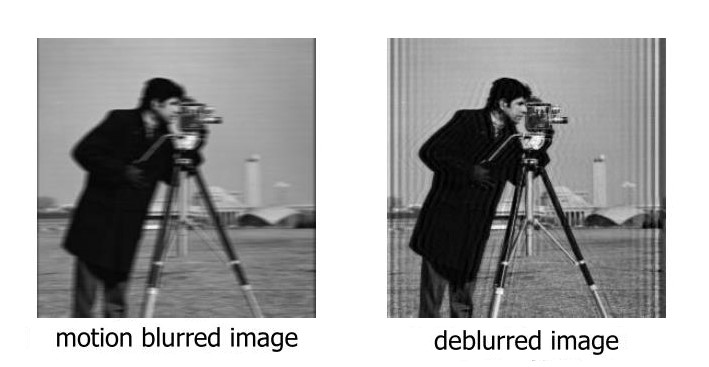
What happens when an image becomes blurry, and can mathematics help us recover what was lost? Image deblurring is a fundamental problem in computational imaging, with applications ranging from medical imaging and scientific microscopy to everyday photography. In this talk, I'll introduce how we can model image blur mathematically and use techniques from linear algebra, optimization, and numerical analysis to reconstruct sharper images. Through visual examples and simple computational demonstrations, I'll explore why image restoration is more challenging than it might initially seem, how mathematical assumptions help us recover useful information, and what these methods reveal about the relationship between mathematics and the images we see.
Pokemon Type Classifier
- Ajmain Zahin (Mathematics and Economics)
- Nishanth Tharakan (Applied Mathematics)

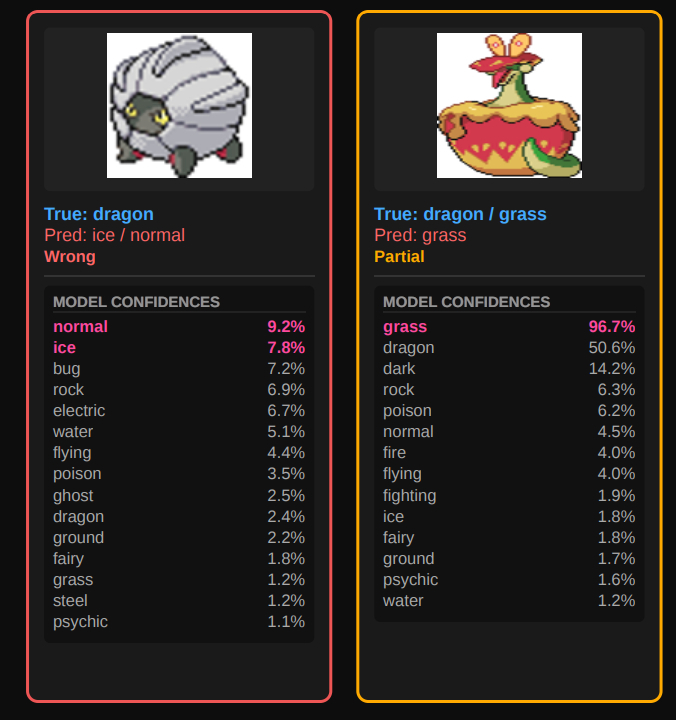
Pokémon is a Japanese media franchise, created and owned by the company Game Freak, based on cartoonish creatures by the titular name. Each Pokemon in the franchise has a type of its own, chosen as a singular or a combination of 18 different types, which give it special abilities and advantages in combat. However, while Game Freak claims to design these creatures to match the type they represent, a lot of designs are often not actually very telling to the human mind. So, in PIC 16B, my team and I went in with an idea to test how good an ML model, already trained on real life creatures, could do in learning what design choices go into different type combinations and use that to guess types for new unseen Pokemon. After a quarter of work, what we found resulted in interesting conclusions about not only Pokemon designs, but of the many issues and considerations one must consider in classification models in general.